Tell me what you’re working on
I’ll reply within one business day.
No newsletters.
Archetypes
The 12 brand archetypes: how character becomes design
A brand has a character, the same way a person does.
Here's where the twelve archetypes came from, how they differ from each other, and how character turns into colour, type, photography and words.
2026-09-19
7 min
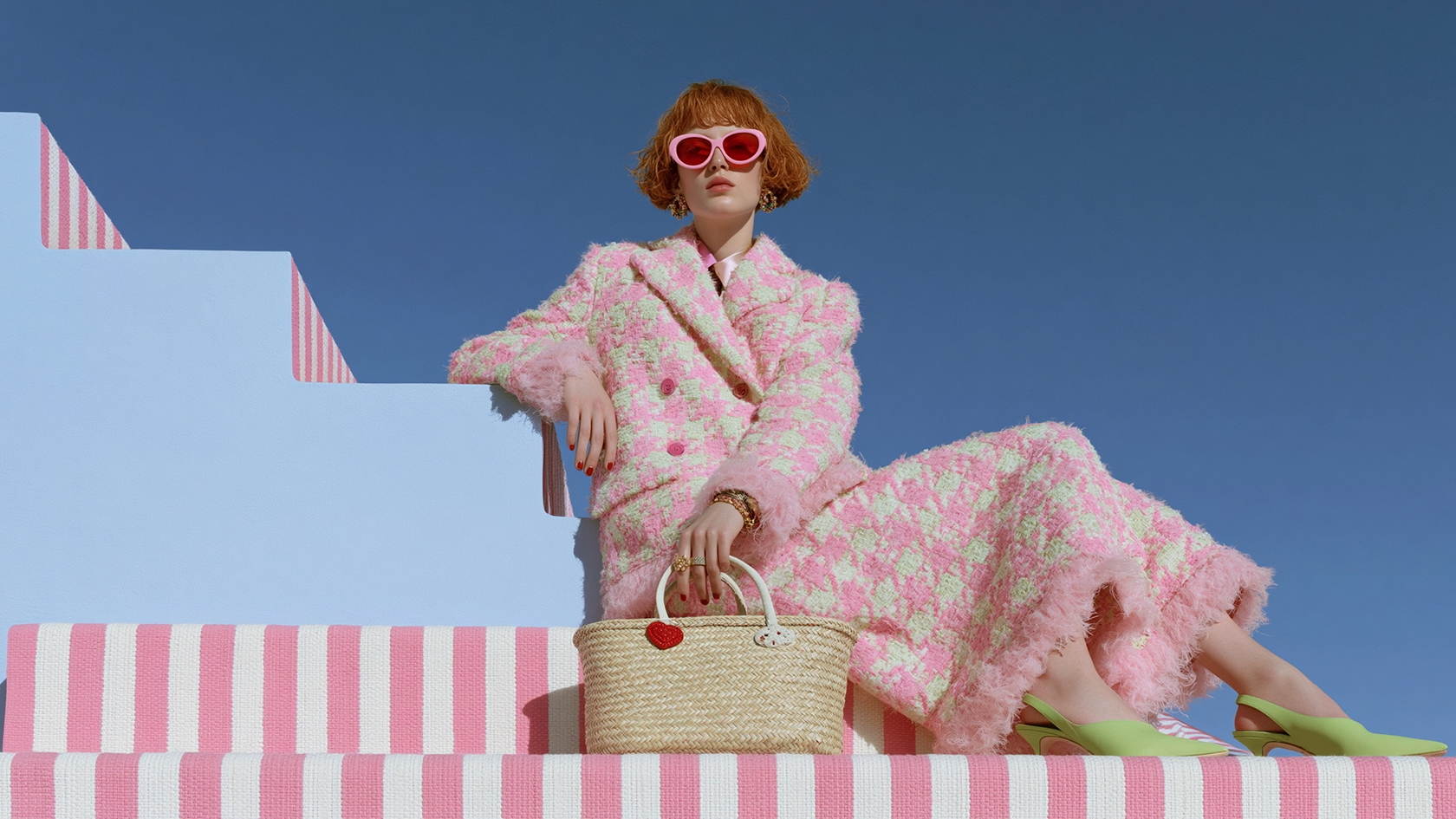
WHAT THEY ARE
An archetype is a recognisable character. The Hero, the Sage, the Outlaw, the Caregiver. We met them in fairy tales, myths and films long before marketing existed.
The idea itself comes from the psychology of Carl Jung. He described archetypes as images shared by all people, ones we read without needing them explained. A Hero is recognised in any culture, even if he never once calls himself a hero.
Applying them to brands came later. In 2001 Margaret Mark and Carol Pearson published *The Hero and the Outlaw* and gathered twelve characters in it. Most branding studios work with that system today.
This isn't astrology and it isn't a magazine quiz. An archetype doesn't predict what will happen to a brand. It describes what the brand already is, or wants to become.
WHY A DESIGNER NEEDS ONE
Without a character, design gets assembled out of taste. Mine, yours, your partner's — the one who saw something nice at a competitor's. Tastes argue, and the loudest one wins.
A character removes that argument. If the brand is a Sage, the question "maybe make it brighter?" answers itself: a Sage doesn't shout. If the brand is a Jester, a strict grid won't suit it, however correct that grid may be.
For me an archetype works as a filter. Every decision passes through it: colour, type, photography, even the length of the phrase on a button. And it saves time. Once the character is clear, half the options drop out before anyone has drawn them.
An archetype doesn't answer "how do we make this beautiful". It answers "how do we make this look like you".
4 DESIRES
Mark and Pearson sorted the archetypes by four basic desires. That's easier to hold in your head than a list of twelve names.
The Innocent, the Explorer and the Sage want freedom and clarity. Their brands promise simplicity, discovery or understanding.
The Hero, the Outlaw and the Magician want to leave a mark. These are brands about overcoming, about challenging the rules, about transformation.
The Everyman, the Lover and the Jester want to be near people. Their language is belonging, closeness and joy.
The Caregiver, the Creator and the Ruler bring order to the world. Through care, through making something new, through control.
12 PORTRAITS
Briefly, each one. The brands below are the ones usually given as examples. Real brands are rarely a pure type, but the leading note is audible.
The Innocent promises everything will be fine. Lots of white and light, soft shapes, simple honest photographs with nothing staged. Dove and Evian are the usual examples.
The Explorer calls you out onto the road. Natural shades, open space, a horizon, a person against a large landscape. Patagonia, The North Face.
The Sage explains how the world works. A restrained palette, a grid, air, facts instead of emotion. Google, National Geographic.
The Hero says "you can do this". Contrast, movement, diagonals, large dense type. Nike.
The Outlaw breaks the rules. Black, rough textures, a broken grid, a defiant tone. Harley-Davidson.
The Magician promises transformation. Deep colours, glow, gradients, a sense of wonder. Disney.
The Everyman is one of us. A straightforward palette, real people, no showy luxury. IKEA.
The Lover is about feeling and pleasure. Warm deep tones, soft light, close crops, an elegant high-contrast typeface. Chanel, Godiva.
The Jester makes life more fun. Bright colours, unexpected type, humour and play. M&M's, Old Spice.
The Caregiver protects. Soft pastels, rounded shapes, warm frames with people in them. Johnson's, Nivea.
The Creator makes new things and lets others make them too. Bold colours, experiment, a visible process. LEGO, Adobe.
The Ruler sets order and status. Dark deep colours, strict serifs, symmetry. Rolex, Mercedes-Benz.
WHAT A CHARACTER IS MADE OF
A brand's character comes out of five things. If even one of them speaks in a different voice, people notice — even when they can't say what's wrong.
Colour sets the temperature. Warm or cold, loud or muted, one accent or a carnival. Colour is read first, before the logo and before the words.
Type sets the intonation. A strict sans speaks calmly and to the point; a high-contrast serif speaks with dignity; a script speaks personally, up close.
Photography sets the distance. Far or near, staged or lived, a clean background or a real room. From a photograph you know immediately whether the brand is on first-name terms with you.
Composition sets the rhythm. Plenty of air and a strict grid sound like a Sage. A dense collage with things knocked off-axis sounds like an Outlaw or a Jester.
Words finish the picture. Sentence length, vocabulary, what the brand stays quiet about. A Ruler doesn't crack jokes in its captions; a Jester doesn't write like a legal department.
The easiest way to see it is on one product. Take a face cream and give it two characters. The Sage cream speaks the language of the lab: white, strict type, texture in close-up, formulas and studies in the copy. The Lover cream speaks the language of sensation: warm skin tones, soft light, hands close to the frame, scent and pleasure in the copy.
The formula inside can be identical. The people who buy them will not be.
WHERE IT USUALLY GOES WRONG
Choosing the wish instead of the truth. Everyone wants to be the Hero or the Magician. But if what stands behind the brand is a warm private aesthetician's practice, a Ruler's character will sit on it like someone else's jacket.
Confusing yourself with the brand. In a personal brand the owner's character and the brand's are nearly the same. In a product brand they aren't: a founder can be an Outlaw while her clinic is a Caregiver. And that's fine.
Borrowing the archetype of the brand next to you on the shelf. In cosmetics it's easy to notice how many brands speak in the Caregiver's voice: gently, carefully, "your skin deserves". One more voice like that simply won't be heard in the choir.
Mixing everything at once. A brand can have one main archetype and one secondary — mine are the Creator and the Sage. When there are five, there's no character at all.
Stopping at the name. Naming the archetype is half the work. The other half is carrying it through every detail, from the logo to a caption in a story. Otherwise it stays a line in a presentation.
WHAT COMES NEXT
An archetype won't do the designing for the designer. It gives a direction, and with it decisions stop being accidental.
From here I'll go through all twelve, one at a time: the character, the visual language, the voice, example brands. The Creator comes first — it's the one closest to me.
How to work out which character your own brand has is a big topic of its own, and I'll come back to it. For now you can simply reread the portraits above and notice which one you recognised yourself in — and which one you recognised your competitors in.
READ NEXT

Websites
2026-09-27
Taplink or Tilda: what to put in your profile link
Read
Websites
2026-09-20
What a Tilda website actually costs
Read
Archetypes
2026-09-19
The 12 brand archetypes: how character becomes design
Read
Websites
2026-09-18
Landing page, multi-page site or online store: how to choose
Read
DESIGNER
for your
BUSINESS
Olga Aleksandrova. Graphic and web designer.
all messengers
+7 (905) 280−87−09
all socials
lekso_design
© 2026 LEKSO DESIGN
Legal information [−]
BACK TO TOP ↑
Prices shown are for reference only and do not constitute a public offer. The final cost is agreed individually after a briefing and once the details are clear.
Olga Yurievna Aleksandrova · Tax ID (INN) 470805835223 · olga.u.alexandrova@yandex.ru
DESIGNER
for your
BUSINESS
Olga Aleksandrova.
Graphic and web designer.
all messengers
+7 (905) 280−87−09
all socials
lekso_design
Legal information [−]
Olga Yurievna Aleksandrova · Tax ID (INN) 470805835223 · olga.u.alexandrova@yandex.ru
Prices shown are for reference only and do not constitute a public offer. The final cost is agreed individually after a briefing and once the details are clear.
© 2026 LEKSO DESIGN
BACK TO TOP ↑