Tell me what you’re working on
I’ll reply within one business day.
No newsletters.
Branding
Logo, visual style, identity, branding: what you're actually ordering
"Make me a logo" is the most common sentence in my inbox. Here are the four quite different jobs hiding behind it, and how to name yours in one word.
2026-09-17
6 min
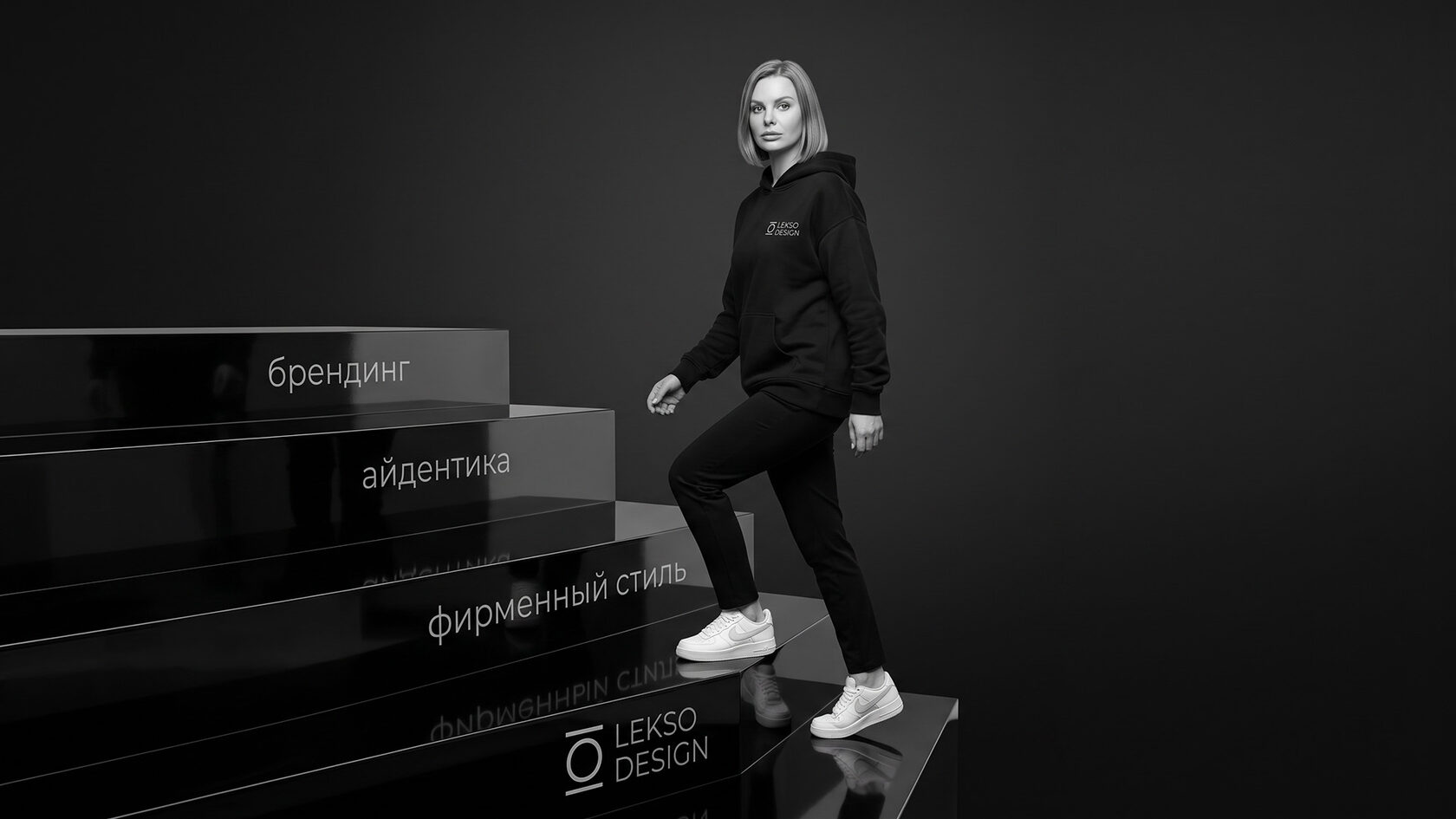
YOU'RE ORDERING A SERVICE, NOT A FOLDER
“Make me a logo” is the most common way a request arrives. And almost always there’s a bigger job standing behind it.
There's nothing wrong with that. It just means that for a while the client and I are talking about different things: they're thinking about a mark, I'm thinking about the system that mark lives in.
What makes the confusion worse is how the difference usually gets explained. People start listing documents: a logo guide, brand guidelines, a brandbook. But nobody came for a folder of files. They came with a problem.
So I split it differently: the service first, then the result. There are four services, and each one ends with its own document.
One caveat up front: there's no hard standard for these words in the industry. "Visual style" and "identity" are often used interchangeably. What follows is how I draw the line.
4 ORDERS, 4 RESULTS
Briefly, so the rest reads easier.
A logo — you end up with a logo guide. A visual style — you end up with brand guidelines. A brand identity — you end up with a brandbook. Branding — you end up with a strategy, plus everything above.
Each level contains the one before it. So the question isn't which document looks nicer, it's which problem you're solving.
A logo guide, guidelines and a brandbook aren’t services. They’re the result.
A LOGO
You're ordering the mark people recognise you by.
I design the mark itself and its versions: horizontal, vertical, and an icon with no wordmark for an avatar and a browser tab. Plus I prepare files that won’t fall apart when they’re scaled up.
What you end up holding is those files and a logo guide — the rules for handling the mark: how much air to leave around it, the minimum size, the permitted colours and backgrounds, examples on a sign, on packaging, in a site header.
This fits when the brand has already taken shape and all that's missing is the signature.
What a logo doesn't do: it doesn't explain who you are, and it doesn't set the look of everything else. It's rarely ordered on its own. Usually six months later it turns out the rules are missing, and the work has to be finished off.
A VISUAL STYLE
You're ordering how the brand looks on real surfaces.
I assemble the visual constants — the mark, the typefaces, the colour, the graphics, the composition — and show them at work: a business card, packaging, social media, a website. The point isn't to list the elements, it's to show how they work together.
What you end up holding is brand guidelines: rules for the whole visual, with sizes, colour codes, the grid and examples of finished layouts.
This fits when the number of surfaces grows, or when more than one person works on the brand: a designer, a social media manager, a photographer, a printer.
What a visual style doesn't do: it answers how to look, but not why that way. The best test is this — a new contractor builds a banner you've never seen, and the banner looks like yours.
A BRAND IDENTITY
You're ordering the system people recognise you by as a whole.
To the visual I add everything else a brand marks itself out with: the photographic style, the tone of voice, the character, how it behaves in different channels. And all of it is derived from meaning rather than taste — from who you are and who you work for.
What you end up holding is a brandbook: the visual rules and the meaning in one document. This is usually where the archetype lives too — the character that the colour, the type and the intonation all grew out of.
This fits when the line is growing and new platforms, markets and languages are appearing. In a year you'll add a fifth product, and the style won't have to be invented again.
What an identity doesn't do: it doesn't create a reputation. It gives you the rules you build one by.
BRANDING
You're ordering for the brand to be perceived the way you intended.
I start with research and positioning, then meaning, then naming if it’s needed, and only then the identity. The order matters more than the speed here: first we settle who you are and why people choose you, then that gets translated into the visual.
What you end up holding is a strategy, plus everything above.
This fits at launch, at a rebrand, when entering a new market. When the question isn't "how do we dress this up" but "who are we and why choose us".
What branding doesn't do: it doesn't come down to a folder of files. It's a process, and the documents in it are a way of keeping the decisions that were made. It doesn't happen quickly, and it's fairer to say that at the start.
HOW TO WORK OUT WHICH ONE YOU NEED
Start from your situation, not from the word. From the biggest order down to the smallest.
The brand doesn't read as a whole, even though everything looks fine on its own — you need branding.
The meaning is clear, but the brand looks like a different company in every channel — an identity.
The visual exists, but every new layout comes out different — a visual style.
There's meaning, there's no mark — a logo.
Price depends on the number of surfaces and the depth of the strategy, and any figure quoted without a brief is guesswork.
READ NEXT

Websites
2026-09-27
Taplink or Tilda: what to put in your profile link
Read
Websites
2026-09-20
What a Tilda website actually costs
Read

Archetypes
2026-09-19
The 12 brand archetypes: how character becomes design
Read

Websites
2026-09-18
Landing page, multi-page site or online store: how to choose
Read
DESIGNER
for your
BUSINESS
Olga Aleksandrova. Graphic and web designer.
all messengers
+7 (905) 280−87−09
all socials
lekso_design
© 2026 LEKSO DESIGN
Legal information [−]
BACK TO TOP ↑
Prices shown are for reference only and do not constitute a public offer. The final cost is agreed individually after a briefing and once the details are clear.
Olga Yurievna Aleksandrova · Tax ID (INN) 470805835223 · olga.u.alexandrova@yandex.ru
DESIGNER
for your
BUSINESS
Olga Aleksandrova.
Graphic and web designer.
all messengers
+7 (905) 280−87−09
all socials
lekso_design
Legal information [−]
Olga Yurievna Aleksandrova · Tax ID (INN) 470805835223 · olga.u.alexandrova@yandex.ru
Prices shown are for reference only and do not constitute a public offer. The final cost is agreed individually after a briefing and once the details are clear.
© 2026 LEKSO DESIGN
BACK TO TOP ↑